

Long Story Short Season 1 by Raphaeil Bob-Waksberg (BoJack Horseman) is an adult animated comedy drama featuring a middle-class Jewish family.
Told across multiple different eras in a non-linear fashion, the show stars the voices of Ben Feldman as Avi Schwooper, Angelique Cabral as Jen Schwooper, Abbi Jacobson as Shira Schwooper, Nicole Byer as Kendra Hooper, Max Greenfield as Yoshi Schwooper, Lisa Edelstein as Naomi Schwartz, Paul Reiser as Elliot Cooper, Dave Franco as Danny Wegbriet, Michaela Dietz as Hannah Schwooper, Gina Rodriguez as Rachel “Baby” Feldstein, Danny Burstein as Uncle Barry, Avia Fields as Walter and Benjamin Hooper-Schwooper, Julie Klausner as Carol Schwartz, & Zoe Lister-Jones as Susan Schwartz, one of Naomi’s sisters.
Long Story Short is run by Bob-Waksberg who also serves as the executive producer alongside Steven A. Cohen, and with Lisa Hanawalt (Tuca & Bertie) serving as supervising producer and designer of original art. The show began streaming on August 22, 2025 on Netflix, and was renewed for a second season even before the premiere.
THIS REVIEW CONTAINS SPOILERS
Long Story Short Season 1 Synopsis:
A dysfunctional family’s shared history, inside jokes, and old wounds are explored in this adult animated comedy spanning multiple years.
Long Story Short Season 1 Review:
I remember seeing this on my feed in August, but I didn’t have the time to watch it. Months passed, and I forgot about it until I saw a reel on Instagram about the best shows of the year. The reel mentioned Common Side Effects, and Raphael Bob-Waksberg’s Long Story Short. With the year end just days away, I decided I wanted to binge on this.
It took just 2 days me to devour this sweetly complex show. From the quirky humour I’ve come to love from BoJack Horseman, to its sensitive yet no-punches-held approach to complex human drama, Long Story Short presents a layered story of intergenerational relationships told non-linearly across multiple time periods.
Imagine what Modern Family would be like if it were made by the creative minds behind BoJack Horseman, and you get Long Story Short. Also, there’s the jewish identity aspect which—thankfully—didn’t overpower the other aspects that the show explores.
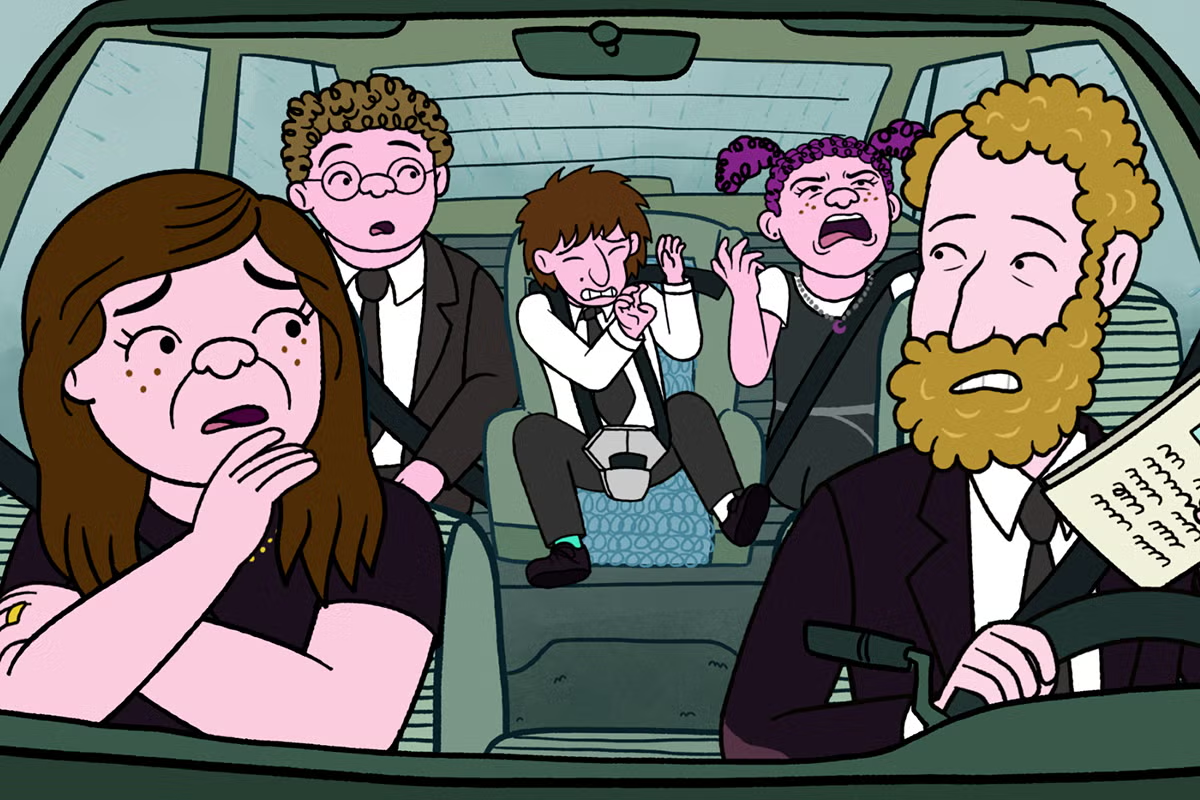
We have the matriarch Naomi Schwartz (Lisa Edelstein) and her husband Elliot Cooper (Paul Reiser). Then there’s their three children, Avi (Ben Feldstein), Shira (Abbi Jacobson), and Yoshi (Max Greenfield), their last names being an amalgam, “Schwooper”. And then the last line of family, Avi’s wife Jen Schwooper (Angelique Cabral) and their daughter Hannah (Michaela Dietz), Shira’s wife Kendra Hooper (Nicole Byer) and their kids Walter and Benjamin (Avia Fields). Every single member of this big Jewish family has their own quirk. But, they also have their share of traumas and personality traits developed directly as a result of their interpersonal relationships. Watching the show feels like piecing together a complex emotional puzzle created with memories and social interactions.
A Mosaic of Memories, Both Good & Bad
Few stories out there really capture the essence of what it really means to be human. To be able to condense a life’s worth of experience into a mere couple of hours is a creative feat not easily achieved. But, you don’t really need to include everything from a life. In creating a montage of relevant memories, you can give the sense of a full life within the few stories you decide to tell.
The animation remains reminiscent of the whimsical, colourful aesthetic we have seen previously in BoJack Horseman as well as Tuca & Bertie, and so does the deeply honest reality of the characters’ emotional and psychological issues. As much as Long Story Short revels in the happy memories, it also understands that the bad memories are just as formative. More so, if we’re being honest here. And in presenting those with the same warmth and sensitivity, we get a show that respects its characters. The humour isn’t all that overt here, as much as it was in BoJack Horseman. But the parts that are feel very familiar. Hell, Yoshi (both personality & design) reminded me too much of Todd Chavez. Almost as if this is an alternate, more toned-down version of the same character.
Each episode pretty much follows a similar formula, with parallel storylines running across two, sometimes three timelines. One is the Schwoopers’ childhood, one is their early adulthood, and one is the present (2020s). Each episode highlights events from the characters’ past that give insights into how their personalities developed to be what they are. But, it’s not as clinical as it is narrative. Just because one faced trauma doesn’t mean they’re broken and lonely. The show also presents the characters’ coping mechanisms are realistic schticks that you or I might have even seen in our own friends and families.
This mosaic of memories embracing the good and the bad equally results in one of the most emotionally mature TV experiences of the year. And I loved it.
All Families Are Unhappy In Their Own Way

Remember that quote from Anna Karenina? “Happy families are all alike; every unhappy family is unhappy in its own way.” It’s such a beautiful line because the more you ponder over it, it proves true.
That’s what Long Story Short really feels like. Despite being just 10 episodes of 22 minutes each, it feels like you know and recognise these characters deeply. Be it Avi’s inability to stand up to his imposing mother, Naomi, because he’s her favourite child, or Shira’s angst and abandonment stemming from her relationships both familial and romantic, these characters feel like very real, flawed individuals. Most of their issues are never truly resolved, but they find ways to manage them regardless. Sometimes, those coping mechanisms don’t work. Many a times, they behave in not-ideal ways that further highlight the depth of their traumas.
But, that’s life, no? Not everything is picture perfect. The randomness, the complexity, and the very flawed and human way to deal with it all, that’s what Long Story Short presents in a balanced, mature way.
Now, there’s one point that made me feel a little sceptical. The show explores a middle-class jewish family. With the current affairs being what they are, I was a little unsure how the show would navigate it. And honestly, I think it did a good job. It neither presented Judaism as a good thing, nor a bad. It’s just one facet of life. Where Avi rejects it, Yoshi embraces an orthodox version of it. And that’s okay, as long as that faith doesn’t overwhelmingly become your identity. Where I did not enjoy the religious themes in Wake Up Dead Man, the restrained exploration in Long Story Short was very much welcome.
Overall, I found Long Story Short to be quite heartwarming and enjoyable. It’s not at the same level as Raphael Bob-Waksberg’s previous work, but we’ll see how that goes as more seasons release.
Long Story Short Season 1 Ending Explained
Okay so, there isn’t really a narrative ending here because the show is a non-linear story. However, where’s what I thought of that last episode.
The final episode features Uncle Barry’s (Danny Burstein) funeral. While no one turned up for Naomi’s funeral because of COVID restrictions, Barry’s gets a full attendance. And in true Schwooper fashion, everyone grieves in their own ways. However, over the course of their lives, they’ve each grown and become self-aware enough. Shira has become more assertive to the point that she exacts revenge against her cousin in her own petty way. Avi is more involved as a father, to the point that he even considers holding a bat mitzvah for Hannah just because she wants it. But, the most growth is from Yoshi, who has grown into a mature adult.
The episode ends with them holding shabbat. The whole process features multiple variations of Naomi, reflective of how she impacted each and every one of them. The shabbat even ends with Naomi screaming at them for being happy and laughing, a nod to how her trauma impacted them just as much as her kindness.
I guess the ending shows how you continue to be affected by the people you have in your life. Death doesn’t stop them from affecting you. The only thing you can do is make your peace with it, and find healthy ways to cope.
To be fair, this isn’t an ending. It’s just the end of the season. But, like how these characters have existed outside of the narrative, they will continue to exist. Because, they all feel like real people. And like real people, their lives are just as complex.
Is Long Story Short Season 1 Worth Watching?

Yes. It’s nowhere close to the brilliance of BoJack Horseman, but it’s only one season old now. I did love how beautifully it handled the complex and mature themes.
Also, I have read criticisms of how the show avoided talking about Israel. And, if this weren’t a Netflix show, that criticism would hold. However, since Netflix is involved, I’m not surprised. I’m sure that Raphael Bob-Waksberg would find a creative way to comment on the Israel-Palestine conflict if he could get away with it. And I hope he finds one in the coming seasons.
Will there be Long Story Short Season 2?
Yes. In a rare move, Netflix actually renewed the show for a second season instead of cancelling it after one. So far, there hasn’t been any news of cancellations, so that’s good. Given Raphael Bob-Waksberg’s track record with BoJack Horseman (one of the best shows ever made in my opinion), we can assume Long Story Short will be a few seasons long at least.
In Conclusion:
Long Story Short Season 1 is a beautifully moving, bittersweet comedy-drama that explores complex and mature emotional themes in a way that’s palatable and enjoyable. A must watch for fans of BoJack Horseman.
Also check out:
- Top 10 Books of 2025
- Top 10 TV Shows of 2025
- Top 10 Movies of 2025
- Stranger Things Season 5 Vol 2 | Review
- Pluribus Season 1 | Vince Gilligan | Rhea Seehorn | Series Review
- Last Night in Soho (2021) | Edgar Wright | Film Review
- One Battle After Another (2025) | Paul Thomas Anderson | Film Review
- Predator: Badlands (2025) | Dan Trachtenberg | Film Review
- Bullet Train (2022) | Brad Pitt | Film Review
- Bugonia (2025) | Yorgos Lanthimos | Film Review
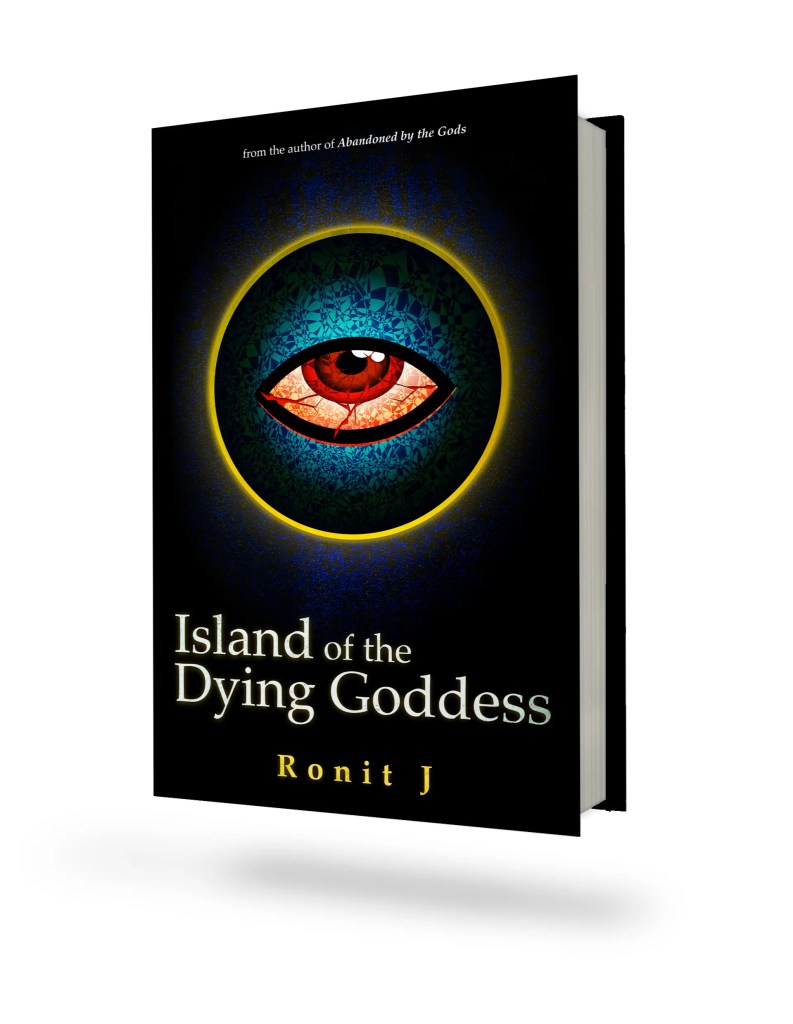
- Island of the Dying Goddess
What did you think of Long Story Short Season 1? Let me know in the comments below! Any other manga, anime, series, book, or movie you’d like me to review? Let me know your recommendations, and I’ll be sure to check them out.
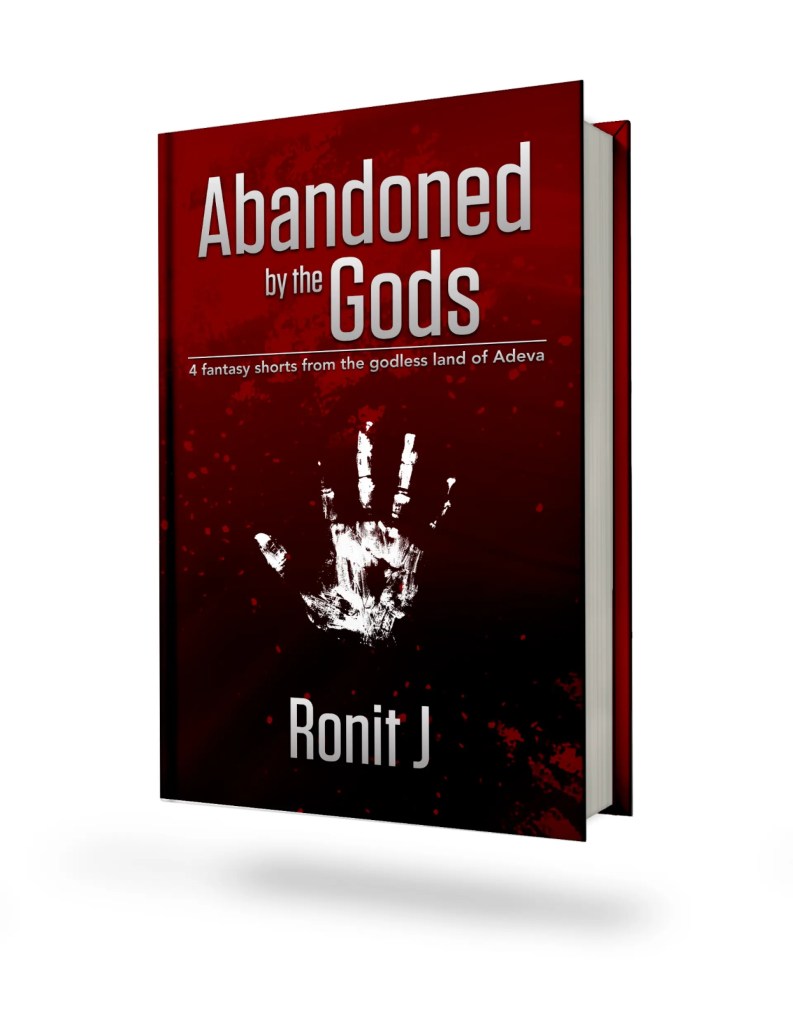
Sign up for my newsletter and get a free ebook of Abandoned by the Gods!
Until next time!

![[Review] Predestination (2014) | Ethan Hawke | Sarah Snook | Time Travel Film | Amazon Prime Video](https://ronitjauthor.com/wp-content/uploads/2025/07/Predestination-2014-Review-by-Ronit-J-featuring-Sarah-Snook-Ethan-Hawke.webp)
![[Review] Takopi's Original Sin (2025) | A Patchwork Quilt of Pathos | Anime](https://ronitjauthor.com/wp-content/uploads/2025/08/Takopis-Original-Sin-Anime-Review-by-Ronit-J.webp)
Leave a Reply