

Kinds of Kindness (2024) directed by Yorgos Lanthimos is an absurd triptych that explores themes of subservience, loyalty, and faith through three seemingly disconnected short stories. Starring the immensely talented Emma Stone, Jesse Plemons, Willem Dafoe, Margaret Qualley, and more, this film is going to come as a shocker for a lot of viewers whose introduction to Lanthimos’ absurdity was the strikingly beautiful Poor Things.
THIS REVIEW CONTAINS SPOILERS & NSFW LANGUAGE
Kinds of Kindness Synopsis:
A triptych fable following a man without choice who tries to take control of his own life; a policeman who is alarmed that his wife who was missing-at-sea has returned and seems a different person; and a woman determined to find a specific someone with a special ability, who is destined to become a prodigious spiritual leader.
Kinds of Kindness Review:
Lanthimos is back to his roots

Yorgos Lanthimos is one of those directors who doesn’t hold back when it comes to the extremes. But, it isn’t all gore and sex for shock value; Lanthimos’ films often revel in the unsettling nature of extremes. Be it Dogtooth’s absurd isolation and absolute subservience, or the game-of-chess powerplay that transpires in The Favourite, Lanthimos depicts the absurdity and the extreme often without overt explanation.
Kinds of Kindness is a film in that very spirit. The three short stories play out in seemingly absurd narratives that don’t explain anything of the characters’ pasts/motivations, yet tell you so much more despite it. Some characters talk in a very non-human, non-emotional manner, almost as if they are mere flesh vessels commanded by a lump of fat. Often the camera takes on distorted angles that skew your perspective, adding to the unsettling atmosphere. Out-of-tune piano notes often play at forbidding moments. All this to create a rich mosaic chockfull of human extremes.
Lanthimos’ films have always fascinated me because of their absurdity and uniquely unsettling atmospheres. Kinds of Kindness was exactly what I was expecting, and a lot more.
RMF: Random Male Figure? Ruminating Mother F*cker? Real Messiah Figure?
The most obvious element common to all three stories is RMF. In one he dies, in another, he saves a life, and in the last, he eats a sandwich after being resurrected. This character is the only obvious connection between the three shorts, with the first and last going out of their way to establish the RMF on his shirt. We barely see him outside of what the titles tell us, meaning we have no way of knowing whether this character strengthens or weakens anything that Lanthimos builds with his main characters.
Maybe that’s the point. RMF could be a stand-in for all of us. A bystander roped into the twisted lives and narratives of Lanthimos’ characters. The only difference is that RMF ends up playing key roles in each story, be it intentionally or unintentionally. Maybe this is just a McGuffin. Maybe there is more to this and I haven’t yet figured it out. If you have any theories, let me know in the comments!
One interpretation of this motif could be a nod to the film’s title. Narratively, RMF rescues (an act of kindness) Liv in the second short, only to realise the pain and suffering he inflicted on the family (and Liz) by bringing her back. To atone, he requests Raymond from the first short to do him the mercy (kindness) of ending his life. But ultimately, fate itself was kind to RMF, resurrecting him. A twisted view of the kindness of people and the world can extend to individuals?
The Absurd Relation Between Power & Loyalty:

Power dynamics have always played an important role in Lanthimos’ films, often exploring the extremes to which humans can go to establish dominance over others. In that spirit, Lanthimos explores our relationship with power and dominance and how that shapes our being. An almost religious assertion, the characters in Kinds of Kindness worship their dominators—be it Plemons treating Dafoe as god in “The Death of RMF”, Stone’s dog-like loyalty in “RMF is Flying” or Dafoe’s cult in “RMF Eats a Sandwich”—Lanthimos explores how the characters function with and without their dominators.
Plemons fails to do anything once Dafoe “frees him”, reinforcing his belief that he needs a guide that he can blindly follow. Similarly, the other two stories are just as absurdly extreme. It’s a given that in any social group, some hold more power than others. But to what extent can we allow such power to be exercised? Is it okay for the state to decide who can marry whom? Or whether or not a couple can have a child? Isn’t such absolute control over our lives fundamentally inhumane?
What about power dynamics between couples? How far is it acceptable to let your partner dictate your actions? On the one hand, Liz and Daniel engage in a polyamorous relationship, but on the other Liz is loyal to Daniel beyond wit’s end. Is that a sign of true love? Is Daniel able to see the dog pretending to be Liz because he loves her? Or is he deeply disturbed, with everything playing out being a fever dream of his? What does that say about Daniel and Liz? Or about romantic relationships in general?
Dogs are a man’s best slave
Another recurring motif is dogs. The most direct one comes in the second, where Liz turns out to be a dog in disguise. Like a grateful stray adopted into a home, she ends up obeying Daniel’s progressively destructive demands, because dogs are absolutely loyal to their owners. This is mirrored by Robert from the first short, where he obeys Raymond like a dog. When kicked out of the metaphorical house, he doesn’t know how to function and suffers as would a dog abandoned on the streets. In the last one, Emily uses a dog to get close to Ruth, a vet wit mystical healing powers. Each story can be seen as an interpretation of our relationship with domestic animals—and to an extent—those that are below us in social heirarchy.
From chattel slavery of the past to corporate and economic slavery of the present, we’re all forced to comply with those more powerful. We even see a montage of dogs doing human activities, further suggesting this idea.

The unbreakable hold of religious indoctrination
The third and final interpretation for this film—similar to, yet distinctive enough from—the first section is the clear religious symbols. More directly, we can see each story as an exploration of people’s absolute submission to their religion. Most people’s relationship with religion isn’t as organic as you would want to believe. If anything, parents tend to indoctrinate their children into their faiths. Breaking away from said faith can often lead to ridicule or ostracisation. But this film doesn’t explore that extreme, instead turning inward towards those so deeply indoctrinated that breaking away from their faith can be detrimental to their being.
Religion can dictate what we eat, who we engage with, who we marry, and so many of our key life moments. For many, religion exerts absolute control over our lives with little to no room for questioning. Some folk can misinterpret religious texts, leading them to cause some very destructive activities. Like Robert, people have killed in the name of their religion. Like Liz, people have taken their lives because of their religious subservience. And like Emily, people have abandoned their families to follow religious/cult leaders. In all three shorts, the indoctrinated suffer because they are deeply entrenched in their faith, or fail to thrive in freedom after breaking away from it.
Maybe this is Lanthimos telling us that religion isn’t a disease that you can eradicate like polio. No matter how much we try, religion will continue to infect human minds, even when they’ve broken away. An unsettling realisation of humanity’s present, and a dangerous prospect for humanity’s future.

Kinds of Kindness worth the watch?
Now this one is debatable. As someone who absolutely loves Lanthimos’ work, my immediate response is—Hell yeah! But, allegedly being a mature adult with the ability to see beyond my biases, my actual answer is—depends on your tastes.
Kinds of Kindness is not for everyone. If you’re exploring Lanthimos because of Poor Things, this film will disappoint you. It is non-linear, absurd to a fault, and very complex with a lot left open to interpretation. Not everyone enjoys this kind of cinema, especially one that revels in the extremes. However, if you’re open to experimenting with this kind of cinema, Kinds of Kindness is a great experience. With its vibrant visuals and stellar performances, it’s a safer starting point for Lanthimos’ filmography.
In Conclusion:
Kinds of Kindness is an absurd film. A true mosaic of absurdity and extremes, Lanthimos has created yet another unsettling experience that will fascinate you the more you ruminate on it post-watch. Maybe not his best work, but it is certainly leagues better than most of the films I’ve watched all year. A hard recommend, especially if you’re a fan of Yorgos Lanthimos and his absurd cinema.
My Rating: ★★★★☆ (4/5)
P.S: I’ve only covered three interpretations in this review. I’m sure there are a lot more nuggets of excellence hidden within this gem. If you found anything you liked in the film, comment below!
Also check out:
Let me know what you think about this review in the comments below.
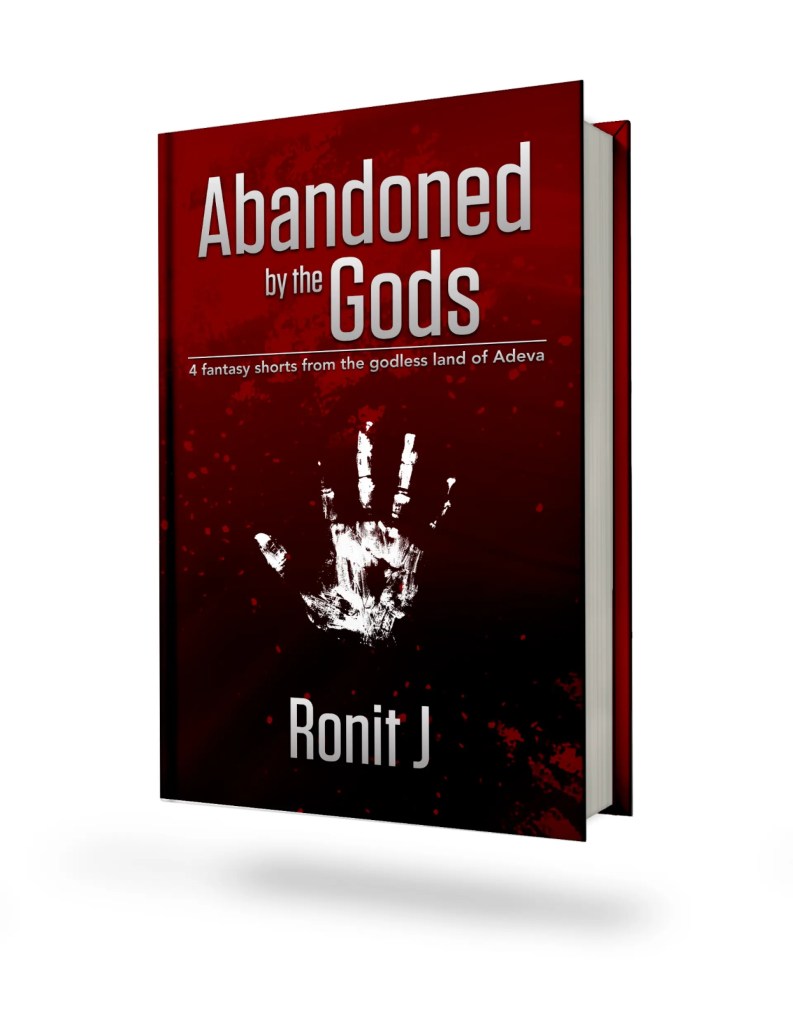
Subscribe to my newsletter, and grab a free copy of Abandoned by the Gods! Until next time!


![[Review] Predestination (2014) | Ethan Hawke | Sarah Snook | Time Travel Film | Amazon Prime Video](https://ronitjauthor.com/wp-content/uploads/2025/07/Predestination-2014-Review-by-Ronit-J-featuring-Sarah-Snook-Ethan-Hawke.webp)
![[Review] Rick & Morty Season 9 | Episodes Ranked](https://ronitjauthor.com/wp-content/uploads/2026/07/Rick-Morty-Season-9-Review-by-Ronit-J.webp)
Leave a Reply